
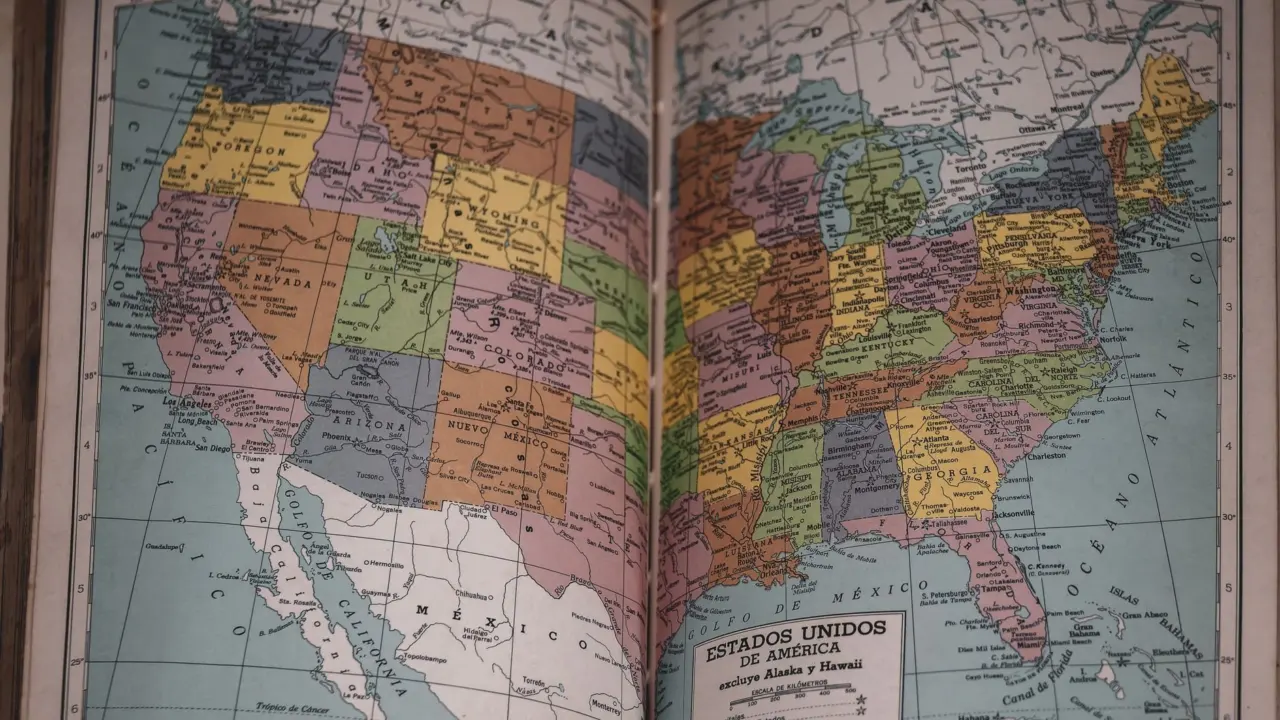
The best fun history facts come with a checkable origin. Start with the question you want settled, whether a custom, a landmark or a president, then use the Pledge of Allegiance section below as a model for separating documented fact from legend.
Every branch below leads to a deeper page, beginning with the history of the pledge of allegiance, the clearest case on this site of a familiar ritual whose real timeline surprises people.
Choose where to start
The quickest way into U.S. history trivia is to decide what kind of curiosity brought you here. A fact about an object works differently from a fact about a ritual, and a fact about a president works differently from a fact about everyday life. Each type has its own typical trap, so the starting point matters more than the order of reading.
Use these criteria to choose a branch:
- You heard a story and want to know if it is true. Begin with the Pledge section on this page, then read common myths about american history. Both are built around the same question: who first said or did this, and when?
- You are drawn to a symbol or a building. Go to the fun facts about the statue of liberty, the liberty bell facts or the fun facts about the white house. Objects and places reward a full list because each detail can be tied to something you can look at.
- You want people and personalities. Choose weird facts about us presidents, then presidential hobbies history for the lighter side of office. For a single White House episode, fdr children’s hour white house is the narrow option.
- You are curious about the founding era. The fun facts about the american revolution page suits readers who want the period rather than a single object.
- You want everyday customs. Try the history of tipping in america, the history of the hammock or the history of maple syrup in america. Customs are where most misattributed origins hide.
- You have a pointed or uncomfortable origin question. A question such as who began the practice of scalping in america needs a careful, documented answer rather than a quick fact, so give it a dedicated page instead of a list item.
- You like the odd and the outdated. Strange old american laws history is the place for rules that sound invented. The same caution applies there as everywhere: an odd rule is only a fact once its text or record can be named.
If none of these fits, read on. The sections below explain the test used for every fact on the site and then apply it to a case that most American readers already know by heart.
What makes a history fact worth repeating
A fun fact earns its place when it names a person, a date and a document or record that can be checked. A fact that only says “people used to believe” or “it is said that” is a rumor with good manners. The facts that survive checking are usually more interesting than the legends they replace, because they come with a reason.

Four questions sort most claims quickly:
- Who is named as the author, speaker or decision-maker, and was that person alive and in a position to act at that time?
- Is there a date or an event attached, such as a publication, a law or a ceremony?
- Does the claim describe the first appearance of something, or only a later and more famous moment?
- Has the thing changed since, and does the story describe the original or the current form?
The last question catches the most errors. Customs and texts drift, and a story told about the present form is often projected backward onto a far earlier one. When a fact says “it has always been this way,” treat that phrase as the thing to test.
Primary records such as magazines, statutes, court rulings and official codes settle questions that retellings cannot. Secondary summaries are useful for orientation, but a good fun fact points back to the dated record. That is also why this page leans on dated events and quotations rather than general impressions.

With the test in hand, the Pledge of Allegiance makes an ideal first case, because nearly everyone has recited it and few have asked where its wording came from.

The Pledge of Allegiance: a worked example
The Pledge of Allegiance is a late nineteenth-century composition whose wording and gesture were settled in stages, not a founding-era text. It rewards the four-question test because its author, date, original wording and later changes are all documented. This section answers how the Pledge of Allegiance originated and what changed afterward.
Who wrote it, and when
According to ushistory.org, the Pledge was written in August 1892 by Baptist minister Francis Bellamy. It was printed in The Youth’s Companion of September 8, 1892, according to the American Legion. The Pew Research Center adds the occasion: the Pledge was created to commemorate the 400th anniversary of Christopher Columbus’s voyage, as described in its overview of facts about the Pledge.
That gives a clear answer to the origin question. A minister wrote it, a magazine published it, and a Columbus commemoration was the occasion. No legislature or founding-era figure appears anywhere in that chain.
What the first version said
The original text began, in the words quoted by ushistory.org, “I pledge allegiance to my Flag and the Republic for which it stands, one nation, indivisible.” Two features stand out. The first phrase says “my Flag,” not the flag of any named country. And the phrase “under God” does not appear in it.

In 1923, according to the same source, the words “the Flag of the United States of America” were added. The change is easy to miss, yet it explains why older recitations sound slightly different from the modern one. It also shows that the wording was edited more than once, so any claim that the Pledge “has never changed” can be dismissed quickly.
The 1942 recognition and the gesture
The American Legion notes that no form of the Pledge received official recognition by Congress until June 22, 1942, when it was formally recognized in the Flag Code. In 1942 Congress also established the practice of rendering the Pledge with the right hand over the heart. The same source describes this as the current practice.
The reason for the change is part of the story. ushistory.org explains that in World War II the original salute too much resembled the Nazi salute, so it was changed. The Flag Code rule that followed says the Pledge should be rendered by standing at attention facing the flag with the right hand over the heart.
The practical point for readers is that the Pledge as now performed is about half a century younger than its text, and its familiar posture is a wartime decision, not a tradition inherited from 1892.
The 1954 change
The Pew Research Center states that Congress added “under God” to the Pledge in 1954, during the Cold War. ushistory.org gives the context: in response to the Communist threat of the times, President Eisenhower encouraged Congress to add the words. That makes the addition a documented political decision with a named encourager and a historical backdrop, not a feature of the original.
Anyone asking who changed the Pledge in 1954 can therefore answer in two parts: Congress made the change, and President Eisenhower urged it. The words were not part of Bellamy’s 1892 text.
Timeline at a glance
| Date | What happened | Planning use |
|---|---|---|
| August 1892 | Baptist minister Francis Bellamy writes the Pledge | Credit Bellamy as author; use this date for creation, not publication. |
| September 8, 1892 | Printed in The Youth’s Companion | Use this date for first appearance in print. |
| 1923 | “The Flag of the United States of America” added | Explains why the original “my Flag” wording looks different. |
| June 22, 1942 | Congress formally recognizes the Pledge in the Flag Code | Use this date for official status. |
| 1942 | Right hand over the heart established as the practice | Answers when the modern gesture began. |
| 1954 | President Eisenhower encourages Congress to add “under God” | Marks the most recent wording change in this timeline. |
Dates in the table are drawn from ushistory.org and the American Legion’s Pledge history.
Separating myth from documented fact
Several common beliefs about the Pledge fail once a date is attached. Treating each as a short test case shows how the same method applies to other American stories. The questions below also answer which common beliefs about U.S. history are myths in the Pledge’s own corner of the subject.
Myth: the Pledge dates from the founding era
It does not. Its author was a minister working in 1892, and the earliest print appearance came in September of that year, as the timeline above shows. Connecting it to the founders is a case of a patriotic text borrowing an older era’s authority.
Myth: the Pledge always included “under God”
It did not. The 1892 wording did not contain the phrase, and Congress added it in 1954, according to the Pew Research Center. If an older recitation, a family memory or a film seems to say otherwise, the memory is more likely mistaken than the record.
Myth: students can be required to recite it
The Pew Research Center reports that students cannot be required to recite the Pledge or any specific part of it, a position tied to the 1943 ruling in West Virginia v. Barnette. The misconception is understandable because the recitation is a routine in many classrooms. Routine and requirement are different things, and the ruling sits on the side of choice.
Myth: the Supreme Court has ruled “under God” unconstitutional or constitutional
The 2004 case Elk Grove v. Newdow is often remembered as a verdict on the phrase. According to Pew, a five-justice majority said that atheist Michael Newdow did not have legal standing. That is a ruling about who may bring the case, so it should not be quoted as a ruling on the wording. Whenever a story says a court “decided” something, check what the court actually addressed.
How to test any other story the same way
- Find the earliest dated appearance. If the story’s earliest record is much later than the event it describes, the story is probably a retelling.
- Separate the text from the practice. The Pledge’s words and its salute changed at different times and for different reasons.
- Read what a ruling decided. A case dismissed for standing says little about the underlying question.
- Prefer the named decision-maker. Statements such as “Congress added” and “Eisenhower encouraged” are more useful than “it was changed.”
The common myths about american history page carries this approach beyond the Pledge to other stories where a pleasant legend has outlived the record.
Landmarks and symbols
Objects make the best entry point for casual readers because you can look at the thing and then learn what is true about it. A symbol’s story often has two layers: the object’s own history, and the legend built around it. Keeping those apart keeps the fun without the errors.
The Liberty Bell is a good illustration of how visible evidence invites questions. Its crack is plain in photographs, which is exactly the kind of detail that attracts stories about how it happened. The liberty bell facts page pairs it with the Great Seal, another national emblem whose design is documented and whose popular explanations deserve the same checking.
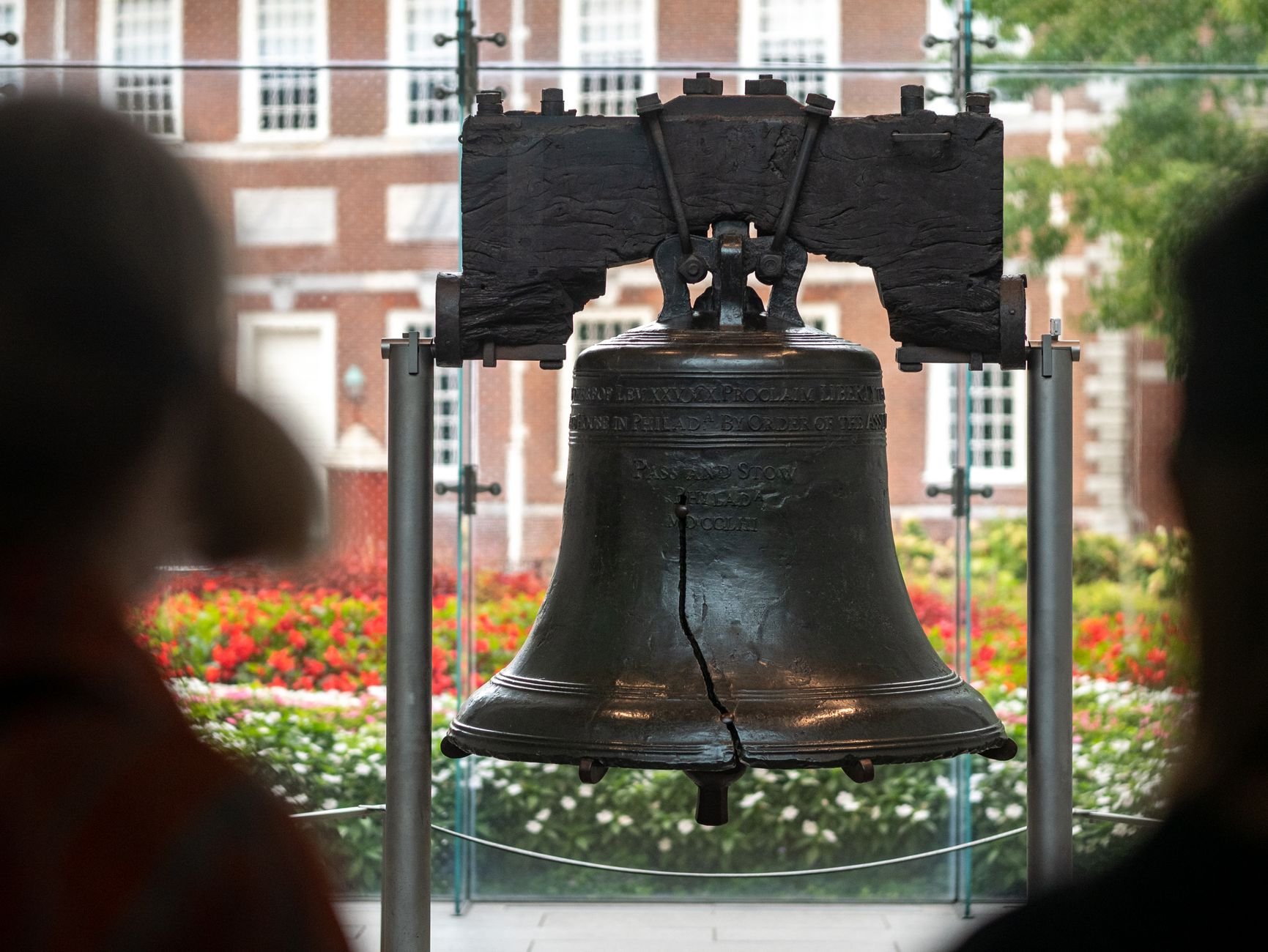
For a larger monument, the fun facts about the statue of liberty page collects details in list form. Choose that style when you want many facts quickly, and choose a single-story page, such as the Pledge, when one origin deserves a full explanation.
Presidents and the White House
Presidential trivia is the most crowded corner of American history facts, and the least reliable. Stories about presidents grow because they are short, vivid and easy to repeat. The facts worth keeping are those linked to a documented habit, an office practice or a record.
The Pledge itself touches the presidency: President Eisenhower’s encouragement in 1954 is part of its documented record, and the Pledge shows how presidential action fits into a longer chain of events. Other presidential stories deserve the same attention to who did what and when.
For the unusual side of the office, weird facts about us presidents is the broadest page, and presidential hobbies history narrows to leisure. A single-person, single-episode choice such as fdr children’s hour white house suits readers who prefer depth to range. The residence itself has its own page in fun facts about the white house.
When you read any presidential fact, ask which part is documented behavior and which part is later embroidery. The shorter and more specific the claim, the easier it is to check.
Customs and everyday life
Customs are where the best-loved origin stories live, because nobody signed a document when they began. Tipping, hammocks and maple sugar are all part of ordinary American life, and each has a history that is usually less tidy than the story told about it.
Everyday topics need a different kind of care from monuments. There is rarely a single author or date, so the honest answer often describes a process: a practice arrives, spreads, changes and acquires a legend. The history of tipping in america and the history of the hammock are built around that kind of explanation. The history of maple syrup in america does the same for a food tied to early American life.
Laws are a related case. A rule that seems absurd today may have had a clear purpose when it was written, or it may never have existed at all. Strange old american laws history is the place to see that distinction handled one law at a time. For the founding period more broadly, the fun facts about the american revolution page offers a wider frame.
Keep reading with a purpose
A good reading path starts narrow and widens. Read one origin story thoroughly, such as the full history of the pledge of allegiance, then move to a list page when you want breadth, and finish with the myths page when you want to test what you already believed.
- Depth first. This suits readers who dislike being told many things at once and want one story with a clear chain from author to date to change.
- Breadth first. This suits readers who want quick conversation material, though each item should still be checked before it is repeated.
- Myth first. This suits readers who already hold a belief and want it tested, which is the fastest way to see the method at work.
Whatever order you choose, carry the same habit with you: ask who, when, what changed and what the record actually decided. That habit turns any list of fun history facts into something you can trust and repeat.
Frequently asked questions
Who wrote the Pledge of Allegiance?
Baptist minister Francis Bellamy wrote it in August 1892, according to ushistory.org.
When did “under God” become part of it?
Congress added the phrase in 1954 during the Cold War, as the Pew Research Center notes.
Why did the original salute change?
In World War II the original salute too much resembled the Nazi salute, so it was changed, and the right hand over the heart became the practice in 1942, according to ushistory.org and the American Legion.
Can a student be forced to recite the Pledge?
No. The Pew Research Center reports that students cannot be required to recite it or any specific part of it, following the 1943 West Virginia v. Barnette ruling.
How should I check a surprising history fact?
Look for a named person, a date and a record, and confirm that the claim describes the original form and not a later one. The myths page shows the same checks applied to other stories.