| Reader situation | Documented fact | Planning use |
|---|---|---|
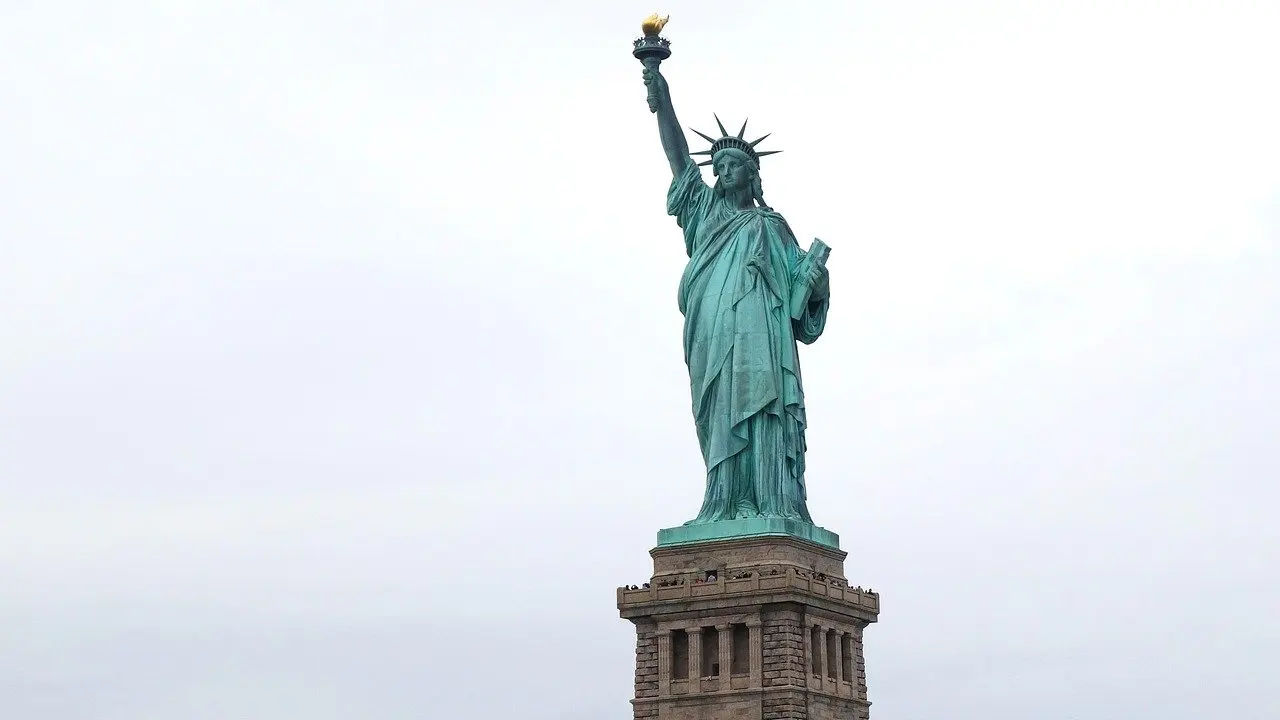
| You need quick numbers for a quiz or caption | Fort, pedestal and statue together stand 305 feet tall; the statue was unveiled to the public in 1886 | Quote 305 feet as the combined height of all three parts, never as the statue’s height alone |
| You are explaining how it crossed the ocean | The statue was disassembled into 350 pieces, shipped to the United States and reassembled on Bedloe’s Island | Use pieces, the unit the National Park Service gives, as the shipping figure |
| You are asking about color | By 1906 the once-bright copper had developed a sea-green patina through natural oxidation | Treat green as the aged state, with 1906 as a documented point and not a start date |
| You are asking who paid | France gave the statue; America was tasked with raising funds for the pedestal, and Bartholdi used design patents to crowdsource funds | Keep the statue’s funding and the pedestal’s funding as two separate stories |
Figures above come from the National Park Service history of Liberty Island and the U.S. Patent and Trademark Office’s Statue of Liberty feature.
The most useful fun facts about the Statue of Liberty are documented ones: how it was engineered, who paid for its pedestal and why its copper turned green. Each fact below carries its date or condition.
This guide is one entry in our fun history facts collection. It sticks to construction, money and aging, so pick the section that matches the question you are trying to answer.
If you want the engineering story
The statue was designed, built and then moved as a kit. Three facts explain most of that: it was taken apart for shipping, an engineer reworked the ironwork mid-project, and its height is easy to misquote.
Taken apart in 350 pieces
According to the National Park Service, the statue was disassembled into 350 pieces and shipped to the United States. It was then reassembled on Bedloe’s Island and unveiled to the public in 1886. That sequence is the core of the construction history: the statue was made in one country and put together in another.
This suits anyone writing a caption or answering a quiz question about shipping. Quote the piece count as the National Park Service states it. A crate total is a different unit, and retellings that mix the two tend to drift.
Eiffel and the ironwork
Gustave Eiffel took over the ironwork in 1879, after the death of Viollet-le-Duc, when the engineer stepped in to continue the work, as the National Park Service records. The useful point is the timing. Eiffel joined an existing project and carried the structural work forward. He did not start it from nothing, so describing him as the statue’s sole creator overstates the record.
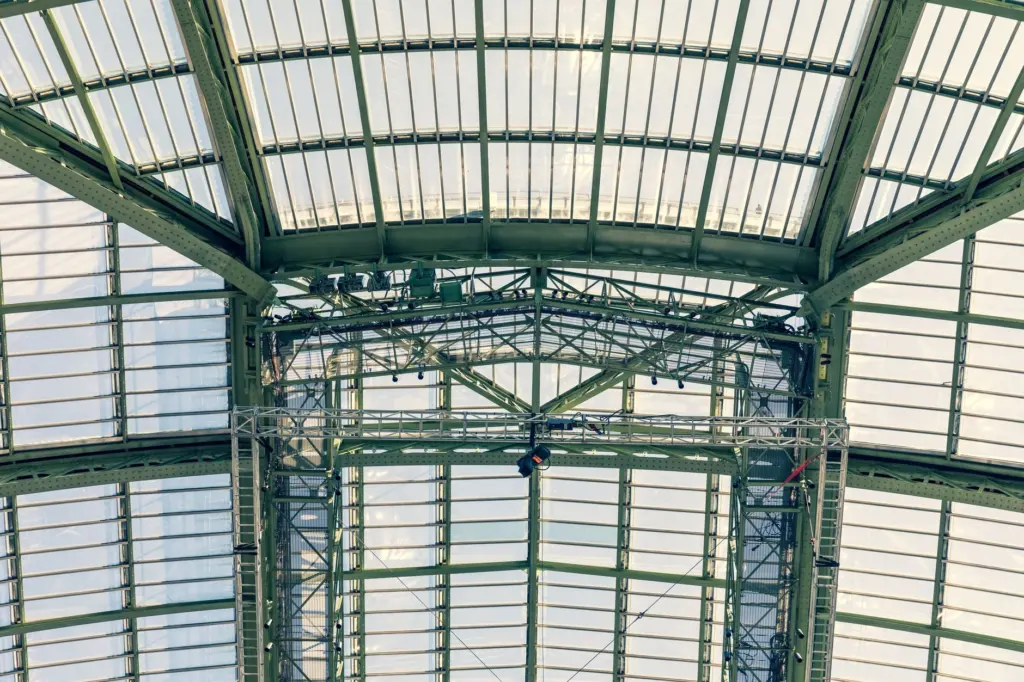
The statue’s sculptor was Frédéric Auguste Bartholdi, whose design the engineering had to serve. If you need one sentence that keeps the roles straight, say that Bartholdi designed the statue and Eiffel continued its ironwork from 1879.
The 305-foot figure and what it covers
The National Park Service says the fort, pedestal and statue together stand 305 feet tall. That measurement includes the base structures, so it is the right number for the whole monument as visitors see it. It is the wrong number for a question about the copper figure alone.
Richard Morris Hunt, an American architect, designed the masonry pedestal, which accounts for much of the height. If a source gives a smaller figure for the statue, it is measuring a different part. Check what the number includes before you compare it with 305 feet.
If you are asking about color and aging
The statue’s color is the most common source of confusion, and the documented answer is simple. It started as bright copper and changed through natural oxidation.
From bright copper to sea-green
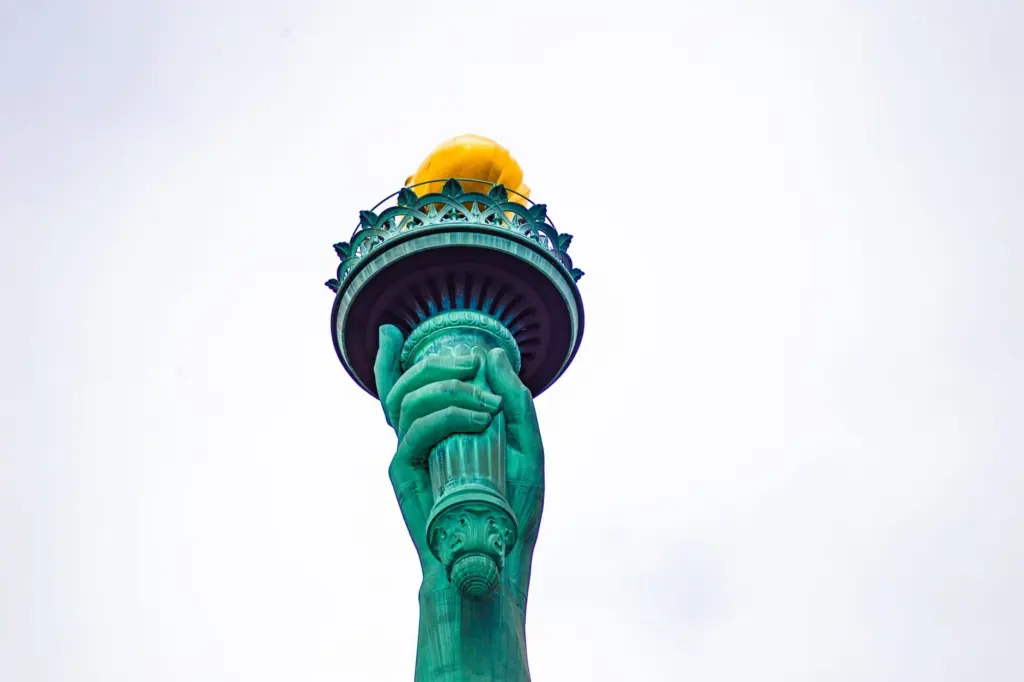
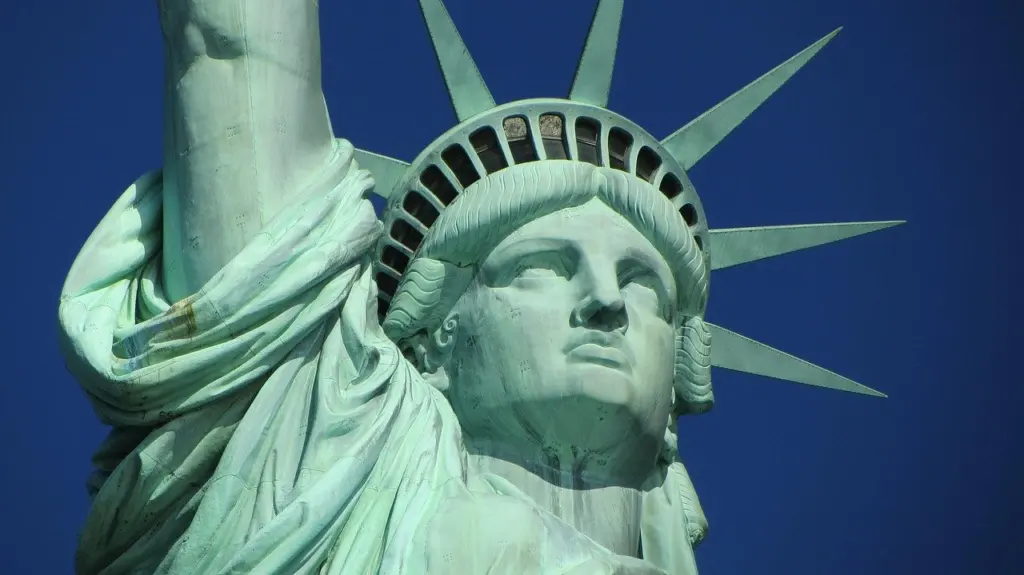
The National Park Service states that by 1906 the once-bright copper statue had developed a sea-green patina due to natural oxidation. A copper patina is a surface layer that forms as the metal reacts with its environment over time. In this case the record attributes the green to that natural process.
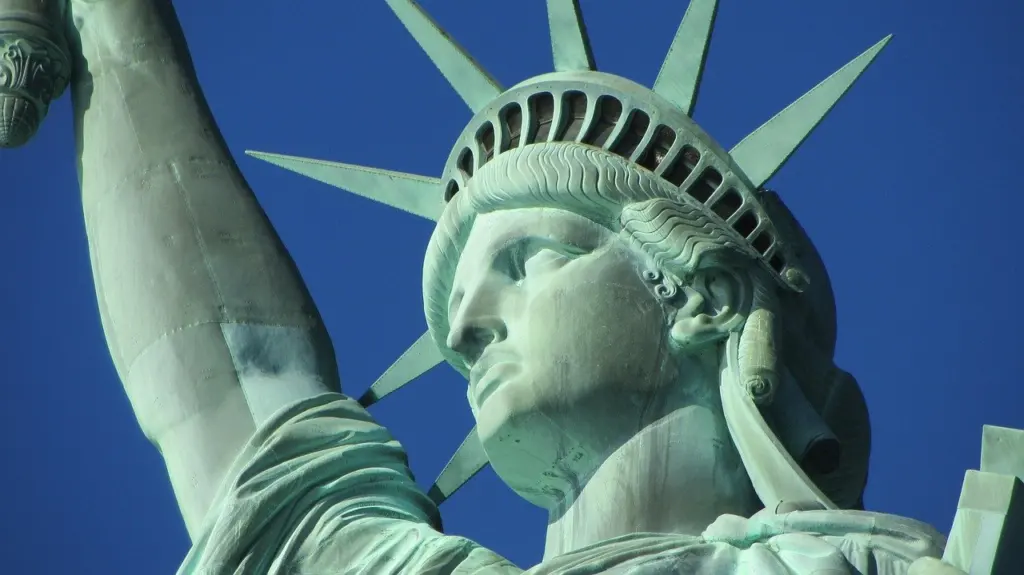
This is the answer to what color the statue was originally. It was the bright color of new copper, and the green is what weathering produced. The figure was not designed to be green.
How to phrase the color change accurately
Be careful with 1906. The source says the patina had developed by that year, which makes it a documented checkpoint. It does not say the change began or finished then. A safe phrasing is that the statue had turned sea-green by 1906.
- For a short answer: say the statue was originally bright copper and is green today because of natural oxidation.
- For a timeline: pair the 1886 unveiling with the 1906 patina, and describe the years between as a gradual change, not a single event.
- For a skeptical reader: point to the National Park Service attribution to natural oxidation, which is a plain material explanation with no symbolism attached.
If you want to know who paid for what
The money story has a clear split. One country supplied the statue, and the other had to supply the foundation it stood on.
France gave the statue, America funded the pedestal
The U.S. Patent and Trademark Office describes the statue as a gift from France and notes that the gift marked a centennial. It also says America was tasked with raising funds for the massive pedestal. This split answers two of the most common questions at once: why the statue came to the United States, and how the pedestal was paid for.
It also corrects a shortcut often repeated in trivia. The statement that France paid for everything leaves out the pedestal. If your point is accuracy, say France gave the statue and Americans raised the money for what it stands on.
Design patents as crowdfunding
The most unusual detail in the funding record is that Bartholdi used design patents to crowdsource funds for the Statue of Liberty, according to the same USPTO feature. A design patent protects the look of an object, so the statue’s image itself became part of the fundraising effort.
This fact suits readers who like the practical side of history, such as inventors, students of intellectual property or anyone who assumes monuments were paid for only by wealthy donors. Keep the claim at the level the source supports. It tells us the method was used to raise money. It does not give a total, so do not attach an amount to it.
The pedestal’s designer
The National Park Service credits Richard Morris Hunt with designing the masonry pedestal. Hunt’s name is the one to use if a reader asks who designed the base. Because the base was an American responsibility, the person and the funding line up neatly. An American architect designed it and America raised the money for it.
If you want the origin and site story
Before the engineering and the fundraising came an idea, an organization and a location. Each has a documented date or name worth knowing.
Laboulaye’s proposal and the Franco-American Union
The National Park Service says Édouard de Laboulaye, a French political thinker and supporter of President Abraham Lincoln, proposed a monument after the Civil War. In September 1875, the supporters formed the Franco-American Union to raise funds for the monument. That is the clearest documented answer to why the project began: a proposal by a Lincoln supporter, followed by an organization built to pay for it.
For short-form content, the Union’s September 1875 founding is a more precise anchor than a vague claim about when the idea began.
The earlier design for Egypt
Bartholdi had already nearly completed the design of an enormous statue of a torch-bearing woman for Egypt, as the National Park Service notes. That earlier project was meant for the Suez Canal and went unfunded. The point worth keeping is that the concept of a giant torch-bearing woman existed before the New York monument. Do not claim that the Egyptian statue was built, because the record says it was not funded.
Choosing Bedloe’s Island
President Ulysses S. Grant approved Bedloe’s Island as the site for the statue in 1877, the National Park Service states. This pins the location decision to a named president and a year, which is more solid than the casual claim that the island was always the plan. The statue was reassembled there before its 1886 unveiling, so the site choice came years ahead of the finished monument.
Where to read next
If documented detail is what you enjoy, fun facts about the american revolution covers earlier national history, while strange old american laws history shows a very different side of the national record.
Frequently asked questions
| Question | Answer |
|---|---|
| When did the statue become a national monument? | President Calvin Coolidge designated the Statue of Liberty a national monument in 1924, according to the National Park Service. |
| Is Bedloe’s Island the same place as Liberty Island? | Yes. An act of Congress officially renamed Bedloe’s Island to Liberty Island in 1956. |
| When did Emma Lazarus write her poem, and when was it inscribed? | Emma Lazarus wrote her poem in 1883, decades before it was inscribed on the Statue of Liberty in 1903. The poem therefore did not exist as an inscription when the statue was unveiled in 1886. |