The best fun facts about the White House are the ones a document can back: every president since John Adams has occupied it, the grounds hold a working complex of buildings, and its animals have ranged from cats to bears.
This list belongs with our wider set of fun history facts, and it keeps record and rumor apart. For more oddities about the people who lived there, see weird facts about us presidents.
How the facts are ordered
There is no ranking here, because these facts do not sit on a common scale. A residence history, an office building and a list of pets cannot be scored against each other. The items run from the most firmly attributed to the most speculative, using three criteria.
- Official attribution. Facts taken from the White House’s own archived grounds page come first, because the institution describing itself is the strongest available voice.
- Lighter secondary material. Popular reference writing supplies colour, such as the animals, and is treated as colour rather than proof.
- Stories that need documentation. Secret rooms and similar tales go last, with a plain account of how to test them.
If you only have time for one item, choose the first. It is the simplest and the most firmly sourced.
The facts worth repeating
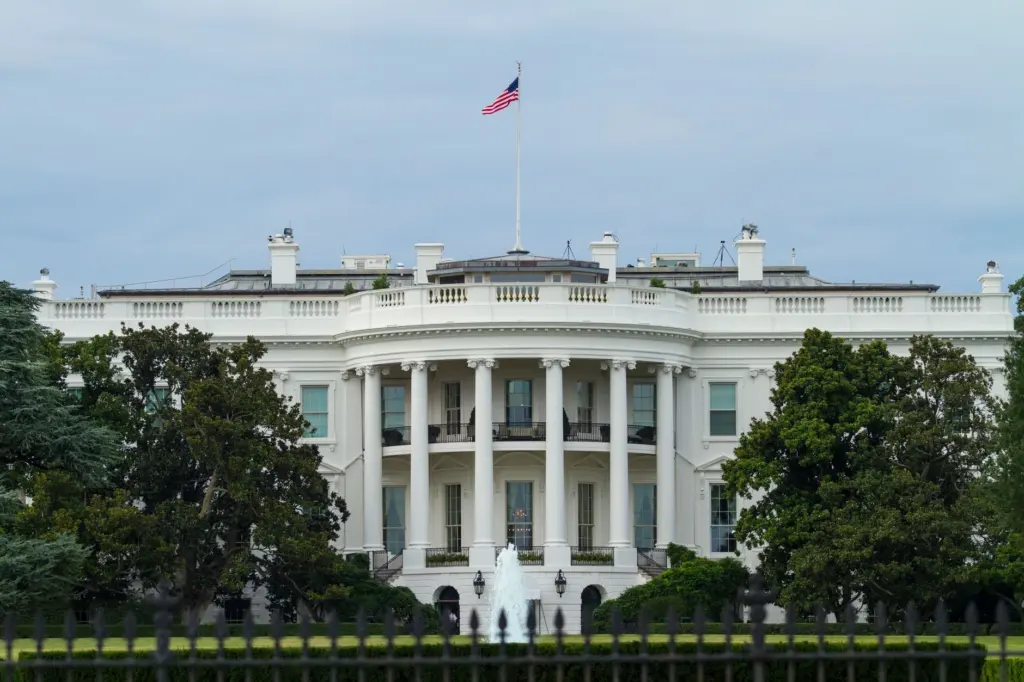
Every president since John Adams has occupied the White House
The archived White House grounds page states that every president since John Adams has occupied the White House. That makes the building the one continuous domestic setting of the American presidency. It suits readers who want a single clean sentence for a quiz, a classroom or a caption.
The limit is in the wording. The statement covers occupancy, not construction or a particular date, so it should not be stretched into claims about how the building looked for any one president. Treat it as proof of continuity, not as a description of the interior.

A residence inside a working complex
The Executive Residence is the home, but the grounds contain far more than a home. According to the same official page, the Eisenhower Executive Office Building is located next to the West Wing and houses a majority of offices. In practice, much of the day-to-day staff work happens in neighbouring buildings rather than in the residence itself.
This is a useful correction for anyone whose mental picture comes from films and television. The name “White House” is often used for the whole operation, but the residence, the West Wing and the Eisenhower Executive Office Building are different parts of one complex. The fact suits readers planning a visit-themed trivia round or a map exercise, since it gives them three named buildings to place correctly.
Animals from cats and dogs to hippos and bears
Reference writing for young readers notes that the animals that have called the White House home range from cats and dogs to hippos and bears. This is a secondary source and it gives no names, dates or administrations, so it works best as a colourful pointer rather than as a foundation for specific claims.
Use it as an opener, then add detail only from an administration-specific record. It suits family-friendly lists and talks for younger audiences, where the surprise of an exotic animal does the work. It is a poor basis for a precise claim such as “which president kept which animal”.
The fire and the Truman-era gutting
Two episodes of damage and rebuilding are part of the building’s documented history: a fire, and the later gutting and reconstruction under President Truman. They matter for a list like this because they turn a vague sense that the building is old into a more accurate one: it has been repaired and rebuilt, not merely preserved.
This is also the best explanation for many popular stories. When a visitor hears that an unusual space or passage exists, the first question is whether rebuilding changed the interior. Check specific details, such as which parts were rebuilt or what survived, against the White House Historical Association, the National Park Service or the Library of Congress before repeating them. Without that check, a rebuilding story easily turns into a legend.
Secret rooms
Secret rooms are the most searched of these topics and the least supported. Nothing in the official grounds material describes hidden chambers, so a claim that one exists should be treated as unconfirmed until an archival source names it.
Be careful with the distinction between hidden and restricted. A space that the public never sees is not a secret room, and the history of rebuilding makes it easy for a rumor to borrow credibility from real structural work. If you want to include secret rooms in a list, present them as a rumor that the documented rebuilding helps to explain, not as a fact.

Comparison of the facts
| Fact | What it establishes | Planning use |
|---|---|---|
| Every president since John Adams has occupied the White House | Continuous presidential occupancy, with no detail about construction or dates | Safe headline fact for quizzes and captions |
| The Eisenhower Executive Office Building is next to the West Wing and houses a majority of offices | The complex includes office buildings separate from the residence | Good for correcting the idea that staff work in the residence |
| Animals have ranged from cats and dogs to hippos and bears | A general range of pets across administrations, without names or dates | Colour for light content; add detail only from a specific record |
Figures and descriptions in the table come from the archived White House grounds page and from Infobase’s presidential fun facts.
Checking a White House story before you share it
A reliable White House fact has an author you can name and a record you can find. Ask three questions of any claim you plan to repeat.
- Name the source. Prefer the White House’s own pages and institutional collections such as the National Park Service, the Library of Congress and the National Archives over unsigned lists.
- Match the claim to its wording. The occupancy statement covers presidents, not architecture. Do not let a true sentence carry a false one with it.
- Look for the rebuilding explanation. If a story involves hidden spaces, test it against the fire and Truman-era reconstruction before accepting a mystery.
For readers who enjoy this kind of source-checking, fun facts about the american revolution applies the same sorting of record from legend to an earlier period.
Frequently asked questions
Which presidents have lived in the White House?
The White House’s archived grounds page notes that each chief executive since Adams has lived in the building.
Where do most White House staff work?
Mostly outside the residence. The Eisenhower Executive Office Building, next to the West Wing, houses a majority of offices.
What kinds of animals have lived at the White House?
Reference writing describes a range from cats and dogs to hippos and bears. It does not tie them to named presidents.
Are there secret rooms in the White House?
Treat the claim as unconfirmed unless an archival source documents a specific space. Rebuilding after the fire and under Truman is the more reliable explanation for many hidden-room stories.