| Stage | What the record shows | Planning use |
|---|---|---|
| Aztec rule, from the 1300s | Aztecs taxed cacao beans and restricted chocolate to noblemen | Describe early chocolate as an elite drink, not an everyday food. |
| 1502 | Columbus tasted cacao on his fourth and last voyage to the New World | Present it as a first European taste, not the start of a chocolate trade. |
| Early in Spain | The Spanish replaced the chile with sugar | Use this as the first big change Europeans made to the recipe. |
| 1585 | First official cocoa shipments reached Seville from Vera Cruz, Mexico | Use it as the date for a regular Spanish supply. |
| 1659 | A chocolate-based drink was sold in France for the first time | Cite it for the drink’s spread beyond Spain. |
| 1828 | Coenraad Johannes Van Houten filed a patent for powdered chocolate | Treat it as a step away from the pure drink. |
| 1879 | Rodolph Lindt developed conching | Cite it as a named step on the way to the modern bar. |
Dates and details in the table come from The Nibble’s chocolate timeline and Fauchon’s account of chocolate’s origins.
The history of chocolate runs from a bitter Mesoamerican cacao drink to a sweetened European drink and, much later, a solid bar. No single person invented it, so credit cultures and steps rather than one name.
Chocolate is one thread in the wider history of candy, and it is a good test case for how a food changes as it crosses continents.
Why no single inventor can be named
Chocolate has no single inventor. It began as a drink made from cacao by peoples of Mesoamerica, including the Maya and the Aztec, and the solid bar came from a string of European changes centuries later. Anyone asking who invented chocolate gets a more accurate answer from a sequence than from a name.
Popular tellings tend to hand the credit to one famous explorer. The dates do not support that. Columbus tasted cacao in 1502, Cortés reached the Aztec capital in 1519 where cacao trading was already in full force, and official shipments to Seville did not begin until 1585. Each of those marks a meeting, not a creation. The people who first prepared cacao as a drink were already doing it, and the Spanish and later Europeans changed the recipe rather than founding it. The Aztec date comes from Madelaine Chocolate’s history, and the 1502 and 1585 dates from The Nibble.
That matters when you write, teach or quiz on the topic. A few rules keep the story honest:
- Credit a culture for the drink. Say the Maya and Aztec prepared cacao drinks. Do not name an individual inventor for that stage.
- Treat explorer anecdotes as encounters. Columbus tasting cacao and Cortés arriving in the Aztec capital are real dated events, but neither one explains how chocolate became a European habit.
- Prefer the question you can answer. “Who first made chocolate?” cannot be pinned to one person. “When did sugar enter the recipe?” and “When did shipments begin?” can be answered with dates.
With the claim sorted, the next question is what the original drink actually was.
Cacao and the Mesoamerican drink
Cacao is native to Central and South America, and the earliest chocolate was a drink, not a food you could bite. Understanding the plant and the preparation explains why later Europeans felt the need to change it.
The cacao plant
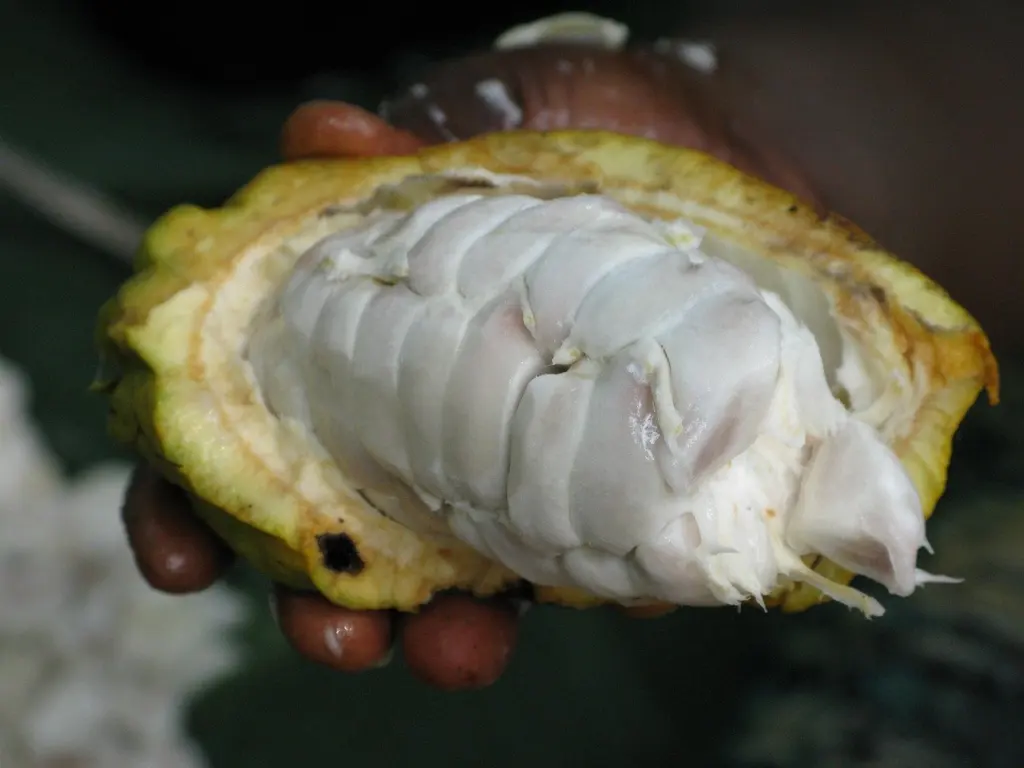
The beans that become chocolate grow inside a pod, packed in pale pulp. According to Madelaine Chocolate’s history, cacao is native to Central and South America, which places the first chocolate firmly in the Americas rather than in Europe or Africa.
How xocolatl was made
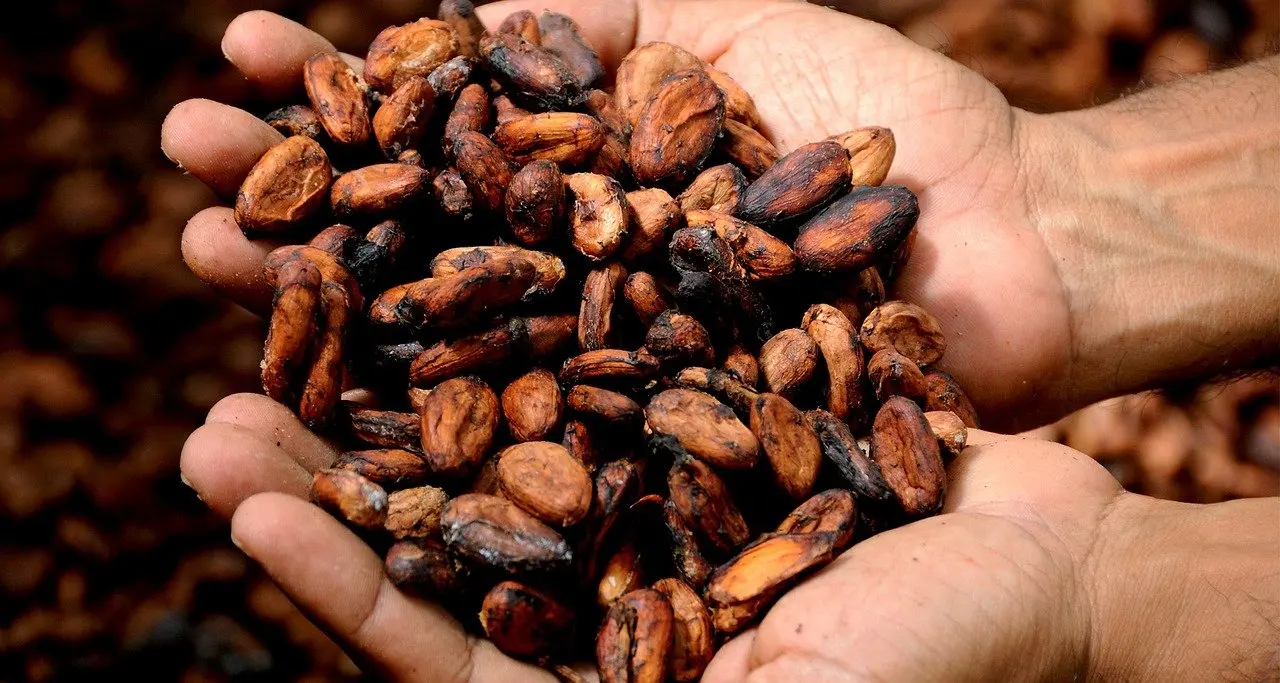
Xocolatl, the Aztec cacao drink, was made by grinding the cacao beans and mixing them with water, herbs or spices, as Fauchon’s history describes. The Maya method, set out by BBC Bitesize, was similar: dry the beans, grind them and mix them with water. The result was bitter and frothy and was often mixed with chilli.
The flavourings were more varied than a single chilli. The Nibble lists local spices including chile, cinnamon, musk, pepper and vanilla, with cornmeal used as a thickener. The practical lesson is that early chocolate was closer to a spiced, savoury-leaning beverage than to anything sweet. If you are describing xocolatl to a modern audience, avoid comparing it with a cup of sweet hot chocolate, because sugar was a later addition.
Beans as money and status
Cacao beans were highly prized and even used as a form of currency by the Aztecs, according to BBC Bitesize. Together these facts show that cacao carried economic and social weight well before any European tasted it. A bean that works as money and is limited to the elite is not a casual ingredient, and that helps explain why Spain later held a cocoa monopoly.
How chocolate reached Europe
Columbus tasted cacao on his fourth and last voyage, but a taste is not a trade.
The bigger story is what Spain did to the drink. BBC Bitesize notes that some drinkers added sugar, vanilla or honey, and The Nibble records that early after its arrival the Spanish replaced the chile with sugar. Three choices follow for anyone telling this part of the story:
- Describe the change as an adaptation. Sweetening and dropping the chile turned a bitter, spiced drink into something different, so it is fairer to call it a European version than an unchanged import.
- Keep Spain’s supply control in view. A monopoly lasting about two centuries helps explain why chocolate stayed tied to Spain for so long.
- Add France as a later step. Fauchon’s history says a chocolate-based drink was sold for the first time in France in 1659, which shows the drink had moved beyond Spain by then.
Even then, what travelled was still a drink. The solid bar needed a separate set of changes.
From drink to solid bar
Chocolate stayed a drink through the Aztec, Spanish and early French stages, and the move toward the modern solid bar came through nineteenth-century technique, not through any ancient recipe. The two dated steps in the record are Van Houten’s powder and Lindt’s conching.
In 1828, Coenraad Johannes Van Houten filed a patent for powdered chocolate. Powder is not a bar, but it changed what chocolate could be: a product handled as a dry material rather than only as a ground-bean paste. In 1879, Rodolph Lindt, a Swiss chocolatier, developed a technique called conching, per Fauchon’s history. Both are named, dated and attributable, which makes them far safer to cite than the stories about who first made a bar.
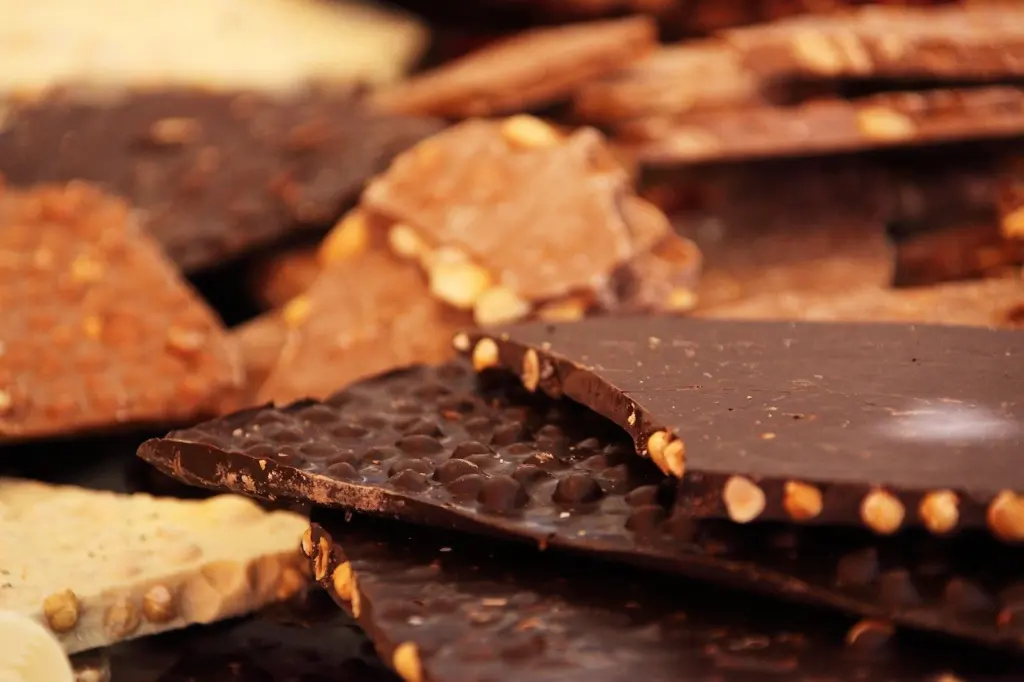
When someone asks when chocolate became a solid food, the honest answer is that it was gradual and technique-driven. Point to powder in 1828 and conching in 1879 as dated steps, and avoid attaching the whole transformation to a single moment or person. Dates for other inventions often paired with this story, such as the cocoa press and milk chocolate, should be checked against a primary source before you repeat them.
Related food histories
Chocolate’s route from a Mesoamerican drink to a sweetened European one has a parallel in other foods that changed as they spread. Readers who want another drink-and-trade story can read the history of coffee, and those interested in how a staple was reshaped across borders can try the history of french fries.
Frequently asked questions
Who first made chocolate?
Peoples of Mesoamerica, including the Maya and the Aztec, prepared the first chocolate as a cacao drink. Cacao is native to Central and South America, and no individual inventor can be named.
Did Columbus or Cortés bring chocolate to Spain?
Neither is credited with a single introduction.
What did early chocolate taste like?
It was bitter and frothy and was often mixed with chilli, according to BBC Bitesize. Sweetness came later, once sugar, vanilla or honey were added.
How long did Spain control the cocoa trade?
The Spanish cocoa monopoly lasted about two centuries, per The Nibble. It followed the first official shipments to Seville.
Were cacao beans ever used as money?
Yes. BBC Bitesize says the Aztecs prized cacao beans and used them as a form of currency.