
| Period | What is recorded | Planning use |
|---|---|---|
| Legend: more than 5000 years ago | Emperor Shennong origin story | Present it as a legend, never as a date for tea’s invention. |
| 200-250 CE | The Shennong Bencaojing describes tea as an herb | Use it as an early written description of tea as medicine. |
| Han dynasty (206 BCE–220 CE) | One of the first recorded uses of tea, taken medicinally | The safest anchor for “earliest recorded use”. |
| Tang dynasty (618–907 CE) | Earliest record of tea as an everyday beverage | The anchor for when tea became a drink rather than a remedy. |
| Song dynasty (960–1279) | Powder whisked in a bowl with a bamboo brush | Use it to explain how preparation changed. |
| 12th century | First documented tea seeds brought to Japan | The anchor for tea spreading beyond China. |
| 1560 | A Portuguese Jesuit becomes the first European to write about tea from personal encounter | The earliest European writing date. |
| 1675 | Tea sold in common food shops in Holland and much of Europe | Marks tea as an ordinary European product. |
| Late 1880s to about 1908 | Hotel tea service, iced tea (1904) and bagged tea in America | The dated American milestones. |
Dates and details in the table come from Stash Tea’s brief history of tea and Valley Brook Tea’s history of tea drinking.
The history of tea starts with a legend, but its earliest recorded uses are medicinal, under the Han dynasty, and it became an everyday drink in the Tang dynasty.
Tea belongs beside other food origin stories on this site, including the history of candy, the history of sugar and the history of the chocolate chip cookie.
The legend versus the written record
Anyone who needs a date for tea’s beginning should treat the Shennong story as folklore and the Han dynasty references as the first firm written footing. The two kinds of evidence answer different questions, and mixing them produces false precision.
What the Shennong legend claims
According to Stash Tea, legend places tea’s origin in ancient China more than 5000 years ago. The story names Emperor Shennong, and that attachment to a famous ruler is why it spreads so easily. A legend of this kind gives a memorable beginning but no dated record, so it cannot settle whether the Shennong legend is true. It can only be reported as a tradition.
What the early records show
The first recorded uses are medicinal. A later book, the Shennong Bencaojing, written between 200 and 250 CE according to Valley Brook Tea, describes tea as an herb that can relieve food poisoning. The book carries the emperor’s name, yet it was written long after the legendary date, so it shows how the legend was used rather than proving it.
Choosing safe wording
When writing or teaching the topic, the choice of phrase decides whether a claim holds up.
- “According to legend” suits the Shennong story and any reference to more than 5000 years ago.
- “One of the first recorded uses” suits the Han dynasty, because the record is medicinal and the wording leaves room for earlier use.
- “Earliest record as an everyday beverage” suits the Tang dynasty and answers the question of when tea was first drunk as a regular drink.
- Avoid a single “invention” date. The evidence describes stages of use, so a question such as when tea was invented is best answered with these stages.
Tea becomes an everyday drink in Tang China
The Tang dynasty (618–907 CE) is where tea shifts from medicine to daily habit. Stash Tea reports that the earliest record of tea as an everyday beverage comes from this period, which makes it the better answer to “when was tea first drunk” in the ordinary sense.
Lu Yu’s Classic of Tea
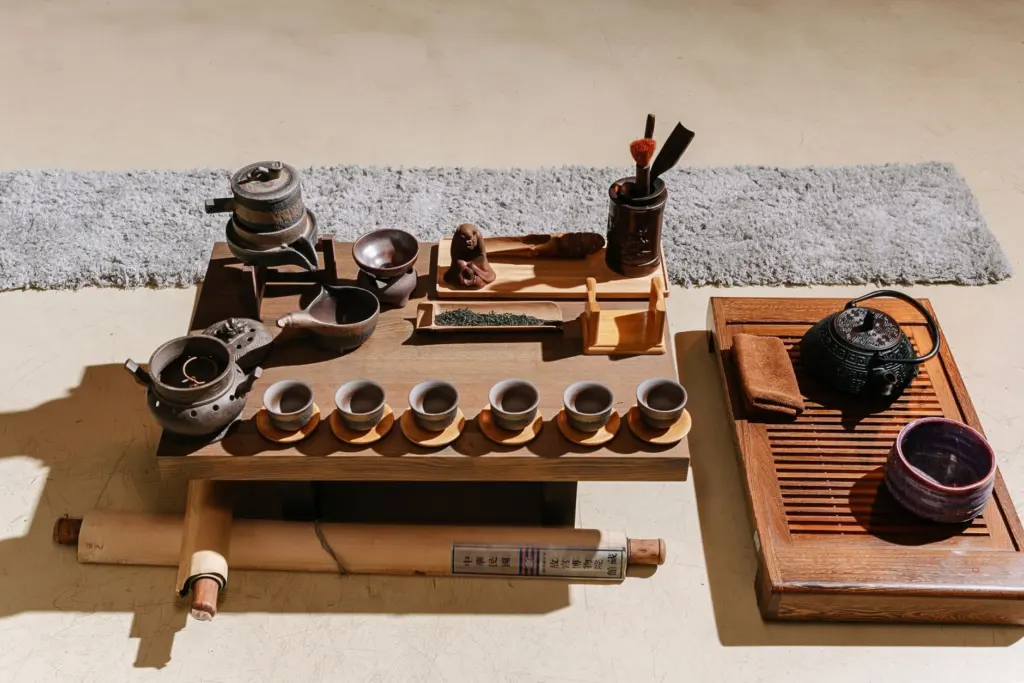
Lu Yu’s Classic of Tea is a mid-Tang book. According to Valley Brook Tea, Lu Yu strongly opposed adding extra flavors and ingredients into the tea soup. The practical lesson is that, by the middle of the Tang period, tea was important enough to have a stated view on how it should be made. A writer should describe the book by this documented stance on additions and avoid crediting it with details that the evidence does not give.

How tea spread beyond China
Tea travelled in steps: first to neighbouring Japan, then into European writing, then into European shops. Each step has a date that can be quoted with confidence.
Japan
Stash Tea states that the first documented tea seeds were brought to Japan in the 12th century by the Buddhist priest Yeisei. The word “documented” matters: it marks the first recorded transfer of seeds and does not claim that no tea reached Japan earlier.
Europe
The European timeline has two clear markers, both from Stash Tea. In 1560 the Portuguese Jesuit Father Jasper de Cruz became the first European to personally encounter tea and write about it. By 1675 tea was available in common food shops throughout Holland and much of Europe. The gap between a single written account and ordinary shop stock is the useful lesson: arrival in Europe was a process, so “tea arrived in Europe” needs either date to be named.

How tea reached America
The dated American milestones in the record are about service, serving style and packaging. They run from hotels to the World’s Fair to the tea bag.
- Late 1880s hotel service. Stash Tea notes that fine hotels in both America and England began to offer tea service from the late 1880s, which shows tea as a fashionable occasion on both sides of the Atlantic.
- Iced tea in 1904. The same source ties iced tea to Richard Blechynden at America’s first World’s Fair, held in St. Louis in 1904, where trade exhibitors from around the world showed their products.
- Bagged tea about 1908. Four years after the fair, Thomas Sullivan of New York developed the concept of bagged tea.
For a question such as how tea came to America, these facts support the account of how Americans came to drink it in hotels, over ice and from bags. They do not describe the first shipments, and an article should not imply that they do.
How preparation shaped the cup
The form in which tea is prepared changed repeatedly, and each change explains something about the era. Valley Brook Tea reports that during the Tang era tea leaves were pulverized into fine powder, which suits the Classic of Tea’s “tea soup” wording and its concern with what goes into the pot.
In the Song dynasty (960–1279), the same source describes people putting fine tea powder in a bowl and pouring hot water over it, with the powder whisked using a bamboo brush. The method moves tea toward the whisked-bowl tradition rather than the steeped leaf. It shows how far the form had travelled from Tang powder.
Frequently asked questions
Is the Shennong legend true?
It is presented as a legend. The written record that survives is the medicinal Shennong Bencaojing and the Han dynasty references, not a dated account from Shennong’s time.
What did Lu Yu’s Classic of Tea record?
According to Valley Brook Tea, the mid-Tang book recorded Lu Yu’s strong opposition to adding extra flavors and ingredients to tea soup.
Who first wrote about tea in Europe?
In 1560, the Portuguese Jesuit Father Jasper de Cruz became, according to Stash Tea, the earliest European to have direct contact with tea and to describe it in writing.
Who developed the tea bag?
Thomas Sullivan of New York developed the concept of bagged tea about four years after the 1904 World’s Fair.