Fun facts about the American Revolution are most useful when they separate documented detail from legend. This list sorts the Continental Army’s improvisations, Washington’s quirks, Franklin’s turkey and disputed battle stories into what is supported and what is folklore.
Picture a classmate or relative repeating a famous battle line as settled history. The short entries below give a better reply, and more bite-sized stories sit in the fun history facts hub.
How to pick facts worth sharing
The strongest Revolutionary War facts do one of two jobs: they correct a familiar story, or they show how improvised and uncertain the war was. Each entry here is chosen on that test, and each says plainly where the evidence is firm and where a tale is better treated as legend.

- Corrects a common belief. Molly Pitcher and the “whites of their eyes” order suit anyone who wants a myth with a documented twist.
- Explains why the war was hard. The volunteer army, the tax problem and the pitchfork improvisations suit readers who want context rather than trivia.
- Adds a human detail. Washington’s dancing, height and teeth suit quick conversation, though they say little about strategy.
A volunteer army facing a better-equipped force
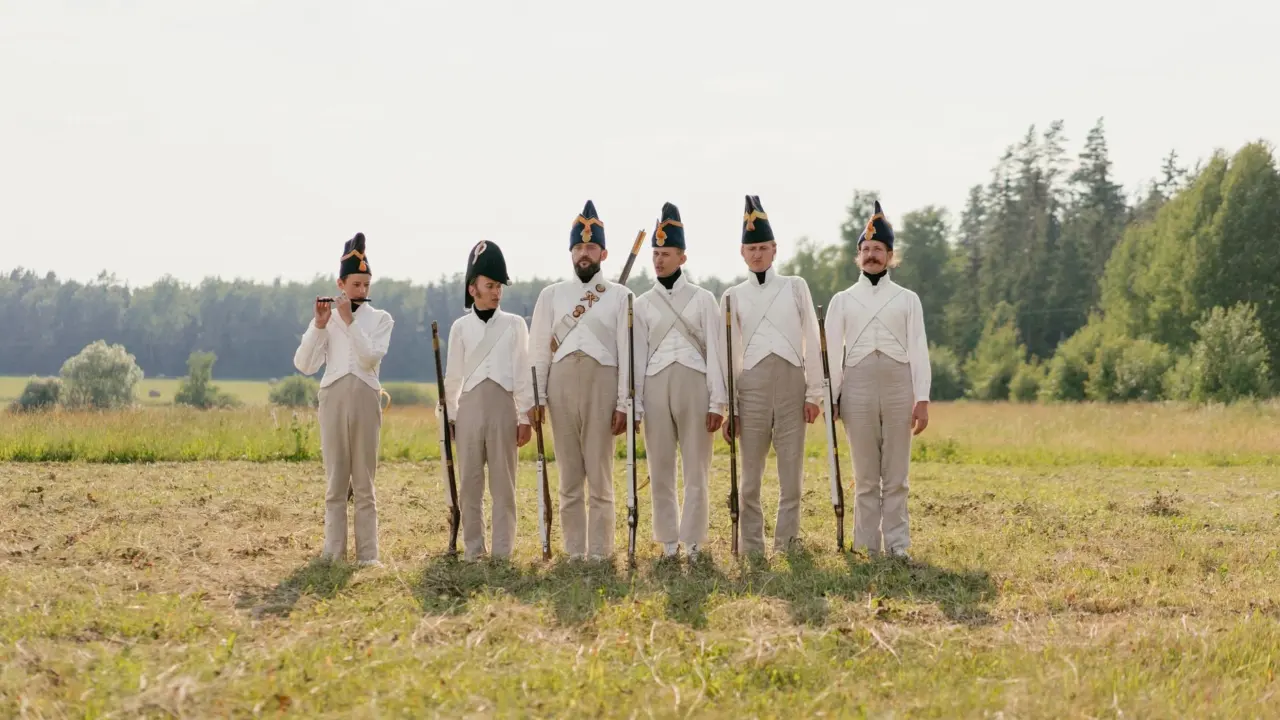
The Continental Army was made up of volunteer soldiers, and that single fact explains much of the war’s difficulty. According to a classroom roundup of Revolutionary War facts, the American side faced better trained, better equipped and better financed British soldiers.
Money was part of the problem. The same account notes that the Articles of Confederation left Congress with no way to levy taxes, so the body directing the war could not simply raise funds to supply the army. For anyone telling the story, this is the more interesting angle: the early United States won while its central government lacked the power to pay for the fight.
This entry suits readers who assume the colonies matched Britain in strength. It does not suit anyone looking for battle detail, since the point is the imbalance in training, equipment and finance rather than any single engagement.
Pitchforks and other improvised weapons
The Continental Army improvised with farm tools, using pitchforks as makeshift spears and bayonets. The reason given is practical: pitchforks were readily available throughout much of the thirteen colonies, according to the same roundup.
This is a fact about shortage, not a picture of the whole army armed with hay tools. It pairs well with the supply problems described above: when proper weapons were scarce, common rural objects filled the gap. It is a fun detail for younger audiences, but it should be told as an improvisation rather than a standard issue weapon.
Valley Forge and the endurance story
Valley Forge is the encampment most associated with hardship. A classroom account describes how General George Washington led the American army through the long, grueling winter at Valley Forge.
The supported point is the endurance of a volunteer force through a harsh season under Washington’s command. Because the volunteer army had a weak central government behind it, the encampment is easiest to understand as part of that larger supply and finance story rather than as an isolated ordeal. Anyone repeating precise figures about the camp should check them against a park or archive source first, since vivid numbers travel quickly and often drift.
Saratoga, Yorktown and the formal end of the war
The Battle of Saratoga was a turning point because it helped secure French support. That support mattered later: French troops and the French navy took part in the decisive victory at the Battle of Yorktown, as the classroom summary explains.
The fun fact here is the chain of cause and effect. An American success at Saratoga brought a foreign ally, and that ally helped close the war at Yorktown. A story that credits only the Continental Army at Yorktown leaves out half of the decisive force.
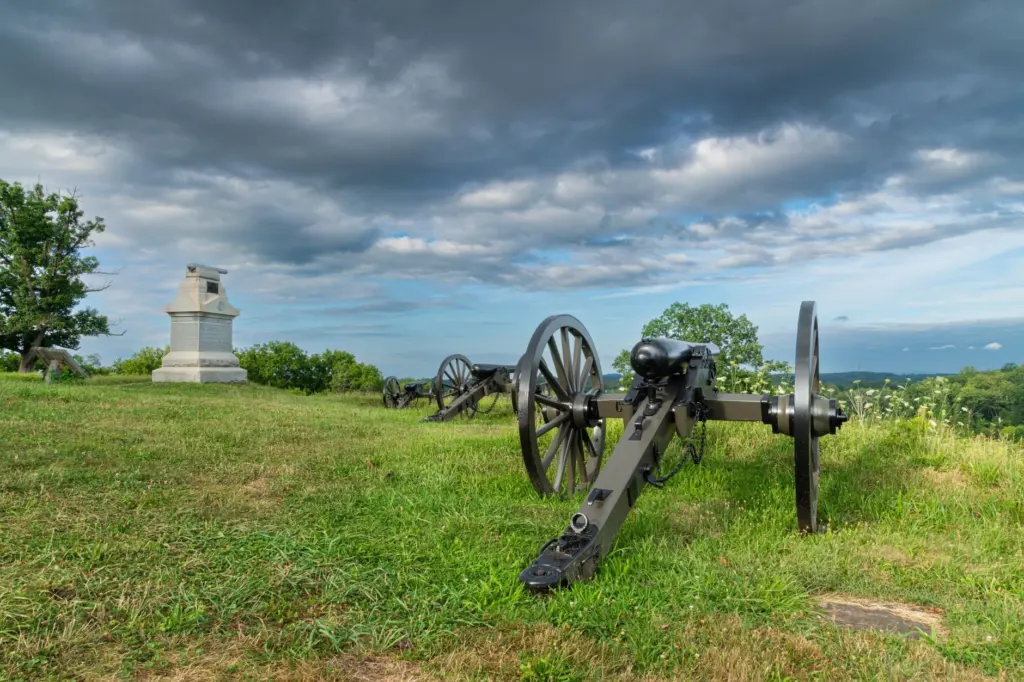
A decisive victory is not the same as a formal peace, which answers the question of how the war ended formally. Yorktown settled the military direction of the conflict, while the Treaty of Paris is the document that formally ended it. Keeping those two events apart avoids the common mistake of treating the Yorktown surrender as the legal end of the war.
Washington’s smaller details
Several of the most shareable facts concern George Washington as a person during and after the war. They add colour, though none of them changes how the war is understood.
- Height. Washington was tall for the 18th century, at 6’2″.
- Dancing. He once danced for three straight hours at a ball without stopping to rest.
- Teeth. He was known for poor dental hygiene and lost most of his teeth, and he had several sets of false teeth made from a variety of materials, including wood, ivory and animal teeth.
- After the war. He became the first President of the United States and served two terms.
These details come from the same classroom roundup. They suit a quick, light moment in conversation, but they work best alongside the army-and-supply facts above, which explain why Washington’s leadership mattered.
Franklin’s turkey and a letter to his daughter
Benjamin Franklin praised the turkey over the bald eagle in an 1784 letter to his daughter. Despite that suggestion, the bald eagle was eventually chosen as the national animal, according to the roundup.
The useful correction is in the wording. Franklin’s preference appears in a private letter, so the story is better told as a personal opinion than as a defeated official proposal. It belongs to the wider Revolutionary era rather than to battlefield history, which makes it a good bridge for readers moving from war stories to national symbols.
Revolutionary War myths, checked
Popular Revolutionary War stories are the easiest place to go wrong. The table sets out three that often circulate, plus Franklin’s turkey, with a safe way to retell each.
| Story | What the account supports | Planning use |
|---|---|---|
| “Don’t fire until you see the whites of their eyes” | Attributed to Bunker Hill, but the origin of the phrase is unclear, and it may trace back to Agincourt in 1415. | Retell it as a famous line with a disputed origin, not as a verified quotation. |
| Molly Pitcher as one woman | The name was a nickname given to several different women who carried water. | Present Molly Pitcher as a composite name rather than a single biography. |
| Pitchfork soldiers | Pitchforks were used as makeshift spears and bayonets because they were readily available. | Describe it as improvisation under shortage, not as the army’s normal arms. |
| Franklin’s turkey | Franklin praised the turkey in an 1784 letter, but the bald eagle was chosen. | Say he expressed a preference, not that he lost a formal vote. |
These points come from a classroom summary of Revolutionary War facts.
The pattern across the table is useful. Several of the best-known stories survive because they are compact and quotable, not because the record behind them is firm. When the origin is unclear or a name covers several people, the honest version is usually just as interesting as the legend.
Choosing what to repeat: a short checklist
- Decide the audience. Light, personal details such as Washington’s height and dancing suit casual conversation, while the supply and finance facts suit readers who want context.
- Check whether a story is attributed or verified. A line tied to Bunker Hill with an unclear origin should be shared as attributed, not as exact history.
- Look for names that cover more than one person. Molly Pitcher is the clearest case.
- Keep fighting and formal peace separate. Yorktown was the decisive victory, and the Treaty of Paris was the formal end.
- Credit allies. French troops and the navy belong in any Yorktown story.
Readers who enjoy this format can continue with fun facts about the white house or fun facts about the statue of liberty.
Frequently asked questions
Was the Continental Army a professional force?
No. It was made up of volunteer soldiers and faced British troops who were better trained, equipped and financed.
Did Franklin’s turkey idea win?
No. Franklin praised the turkey in an 1784 letter to his daughter, but the bald eagle became the national animal.
Was Molly Pitcher a single historical woman?
The name was a nickname applied to several women who carried water, so it is safer to treat it as a composite than as one person’s biography.
Who fought alongside the Americans at Yorktown?
French troops and the French navy took part in the decisive victory, which followed the French support secured after Saratoga.