

Someone insists the origin of rule of thumb is an old law letting husbands beat wives with a stick no thicker than a thumb. No such law is documented; the phrase simply means a rough guideline drawn from experience.
The wife-beating story is a textbook folk etymology, a plausible explanation attached to a phrase after the fact. This guide separates what the record shows from what repetition has added, and it fits into the wider study of the origin of common phrases.
What rule of thumb means
Rule of thumb is an idiom that describes a common-sense but approximate way of deciding a course of action. Wiktionary defines it as a general guideline rather than a strict rule, an approximate measure based on experience. Nothing in that sense involves violence, law or marriage.
The practical meaning explains why the phrase survives. A rule of thumb is useful when an exact calculation is unavailable or unnecessary, and it is understood to be fallible. If you need a precise figure, the phrase tells you to measure properly instead.

Earliest documented uses
The phrase is old, and the estimates of its age differ by source. Freyd and Johnson report that the Oxford English Dictionary indicates the phrase has been used for about 300 years for measurements based on experience rather than exact science. A language guide says the idiom dates back at least 400 years to a time when body-part measurements were common. Wiktionary states the term is attested since 1658 and of uncertain origin, but probably based on the use of the thumb in measurement.
Treat 1658 as the earliest citation in that entry, not as a proven moment of coinage. The same entry also lists a later literary use by Ogden Nash, written around 1935 and published in 1959, which shows the phrase staying in ordinary use as a figure of speech.
The decisive point comes from the radio programme A Way with Words. Its host says the expression had been in use at least 100 years before the judicial opinion of the 1780s that is often blamed for it. A phrase cannot have been invented by an opinion that came a century after the phrase was already in use.

The wife-beating legend and what the record shows
The legend says an old law, often attached to English common law, allowed a husband to beat his wife with a stick no thicker than his thumb. Anyone searching for a statute, or for an authority such as William Blackstone’s Commentaries, is looking for something legal scholarship does not locate. Kelly’s 1994 article in the Journal of Legal Education concludes that the rule of thumb is not a principle enshrined in the law, and notes that the exact phrase never occurs in legal history.
| Common claim | What the record shows | Planning use |
|---|---|---|
| A law set a thumb-width limit for a husband’s stick | Kelly finds it is not a principle enshrined in law, and the exact phrase never appears in legal history | Do not repeat it as legal fact |
| The phrase always carried this meaning | The phrase itself did not have wife-beating overtones until recently | Treat it as a modern association |
| Modern feminists invented the story | The idea is much older, possibly from a judge in the American South over a century before 1998 | Attribute the story to its legal sources |
| The story explains the phrase’s origin | The measurement sense of the phrase predates the legal episodes | Use the measurement sense when explaining origin |
These points come from the survey by Freyd and Johnson, and Wiktionary likewise calls the thumb-thickness claim erroneous.
The judicial opinions behind the story
The story did not come from nowhere. A few judicial opinions gave it material, and it is useful to see how thin they are.
- Sir Francis Buller, 1782. Freyd and Johnson report that the English judge, in 1782 (possibly 1781), gave credence in a legal opinion to a thumb standard, reportedly prompting critical cartoons. That is an opinion, not a statute.
- Joyner v. Joyner, 1862 (divorce case). The hosts of A Way with Words stress that there was never a law, only judicial opinions, and point to this divorce case as one worth reading.
- State v Rhodes, 1868. Cited as 61 N.C. 453, this North Carolina case is described as the only one on record where a husband was let off on a thumb-width switch argument. The state Supreme Court repudiated that argument.
- Prosser, 1971. The legal scholar wrote that there is probably no truth whatever in the legend that a husband was permitted to beat his wife. The quotation comes via Kelly.
The modern popularity of the claim has a traceable path. Wiktionary says it appeared in The Washington Post and Time, and may originate from Del Martin’s 1976 book Battered Wives. Kelly traces the idea to Davidson (1977). The result is a claim that sounds authoritative because major outlets repeated it, even though its legal footing was never established.
Why measurement explanations sound plausible
Measurement explanations succeed because they fit how people once measured. The language guide notes that rule of thumb historically referred to body-part measures such as the foot, cubit, yard, span and hand. Some of those survive; the hand is still used in the equestrian world and was standardised to 4 inches. A thumb-based unit therefore sounds like a natural member of the family.
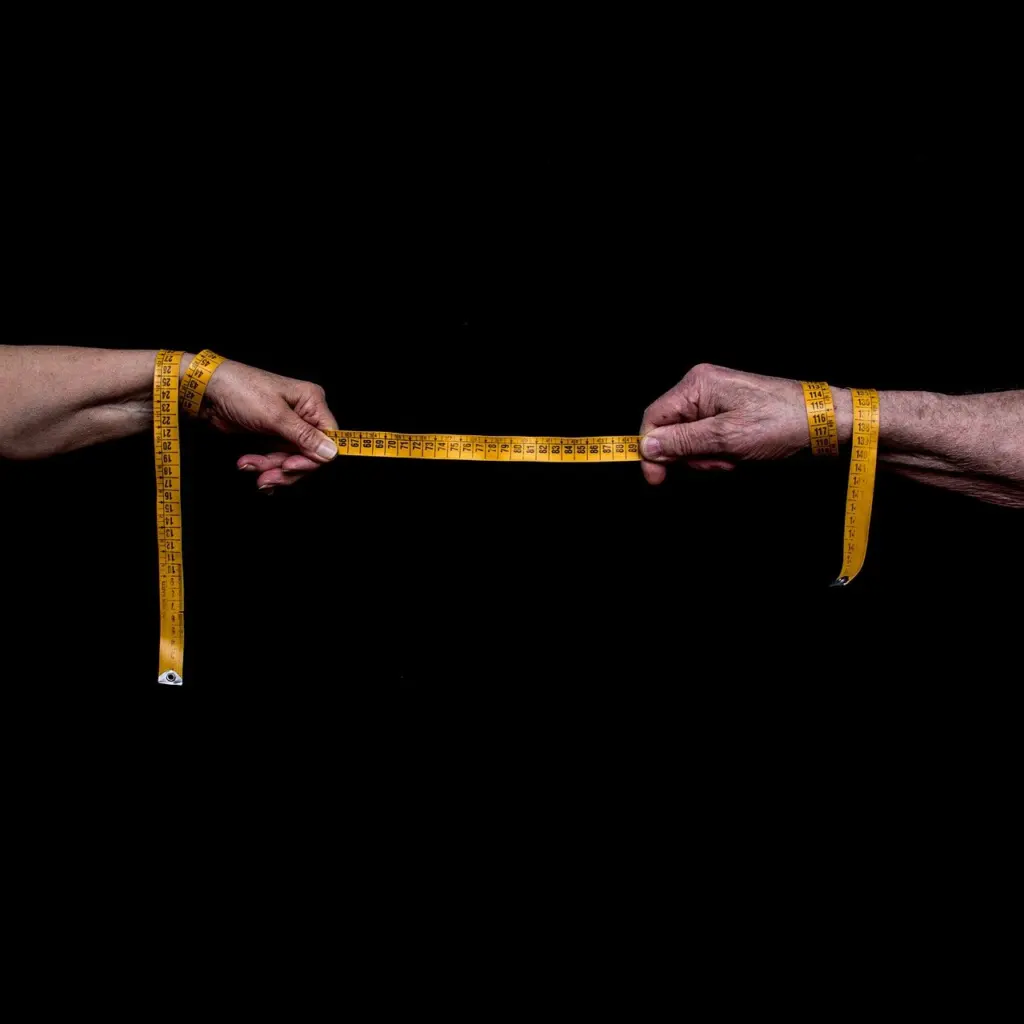
Wiktionary lists three competing theories that stay inside the measurement family:
- The inch. One theory notes that the inch originated as the distance between the base of the thumbnail and the first joint.
- Wind testing. Another holds that a wetted thumb was used to test the direction of the wind.
- Banquet plates. A third connects the phrase to spacing plates at a banquet.
None of these is a settled derivation, and Wiktionary presents them as proposals while calling the origin uncertain. That is the honest position: the thumb-measurement link is probable, but the exact route is open.

How a folk etymology spreads
Freyd and Johnson give a blunt warning: folk etymologies are very often incorrect. Rule of thumb shows why they thrive, and the pattern is useful for judging any phrase story.
- A vivid, memorable scene. A stick, a husband and a judge are easier to remember than a vague history of body-part measuring.
- A fragment of real material. Judicial opinions did discuss thumb-width switches, so the story seems to rest on something, even though they do not account for the phrase.
- Authority by repetition. Once prominent publications carried the claim, later writers cited them rather than checking dated citations.
- Moral appeal. A story that exposes an injustice feels worth believing, which makes it less likely to be questioned.
The rival measurement theories above follow the same shape: each offers a tidy mechanism without a dated citation to support it. The test is the same in every case. Ask for the earliest dated use of the phrase and check whether the proposed story came first or later. The word OK is another case where competing stories need testing against documented use; where did okay come from applies that test. For a different phrase, the origin of saved by the bell is worth reading next.
Frequently asked questions
| Question | Answer |
|---|---|
| Is rule of thumb still safe to use? | Yes. Its documented sense is a rough guideline drawn from experience, and the wife-beating story is not supported by legal history. |
| Did a law ever allow a thumb-thick stick? | No law is documented. Kelly’s survey finds no enshrined principle, and the exact phrase never occurs in legal history. |
| How old is the phrase? | Estimates vary. Wiktionary attests it since 1658, and the OED is cited as showing use for about 300 years. |
| Where did the wife-beating claim spread from? | Wiktionary traces the claim’s spread to The Washington Post and Time, and suggests it may stem from Del Martin’s 1976 book Battered Wives. |